
In a reality in which Israel’s healthcare system is grappling with overload, staffing shortages, and ongoing security challenges, there are those who are not only talking about solutions, but also building them from the ground up. Zefat Academic College (ZAC) is one example. In recent years, it has set itself a clear goal: to be the northern home of health-professions training, and prepare a new generation of nurses, emergency-medicine practitioners, physical therapists, and more who will remain in the northern region and strengthen it from within.
“As an academic institution situated in the heart of the Galilee, we are part of a broader social fabric that influences our surroundings,” says President Prof. Yechezkel Taler. “For us, higher education is a tool for transforming reality: reducing gaps, strengthening communities, and creating opportunities. Especially in the North—where the disparities are felt the most—we have a responsibility to generate genuine social and environmental impact,” he said. “Our graduates leave not only with a degree. They leave with a sense of mission and a commitment to the place they came from and the place where they work.”
This vision rests on a broader conception of the college as a partner to the region’s healthcare system. ZAC emphasizes that it is not merely an educational institution, but also a stakeholder that works together with hospitals, health funds, and the community to cultivate quality personnel who will stay in the North and improve the area’s quality of life.
One of the most prominent expressions of this approach is in the field of emergency medicine, which has gained significant momentum in recent years. The college’s program recently received permanent accreditation—a milestone that establishes its standing as a leading track for paramedic training in Israel. The three-year program leads to an EMS.B degree, combining scientific studies, advanced simulations, and clinical field experience in ambulances, emergency rooms, and intensive care units.
The real-world impact is tangible: Graduates of the program are now integral parts of Israel’s medical system. Some even serve as physician assistants in hospitals, contributing to reduced strain and strengthening the continuum of care from the field to hospitalization.
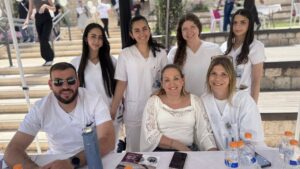
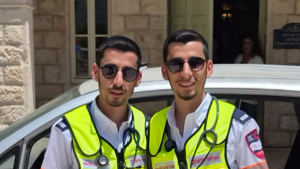
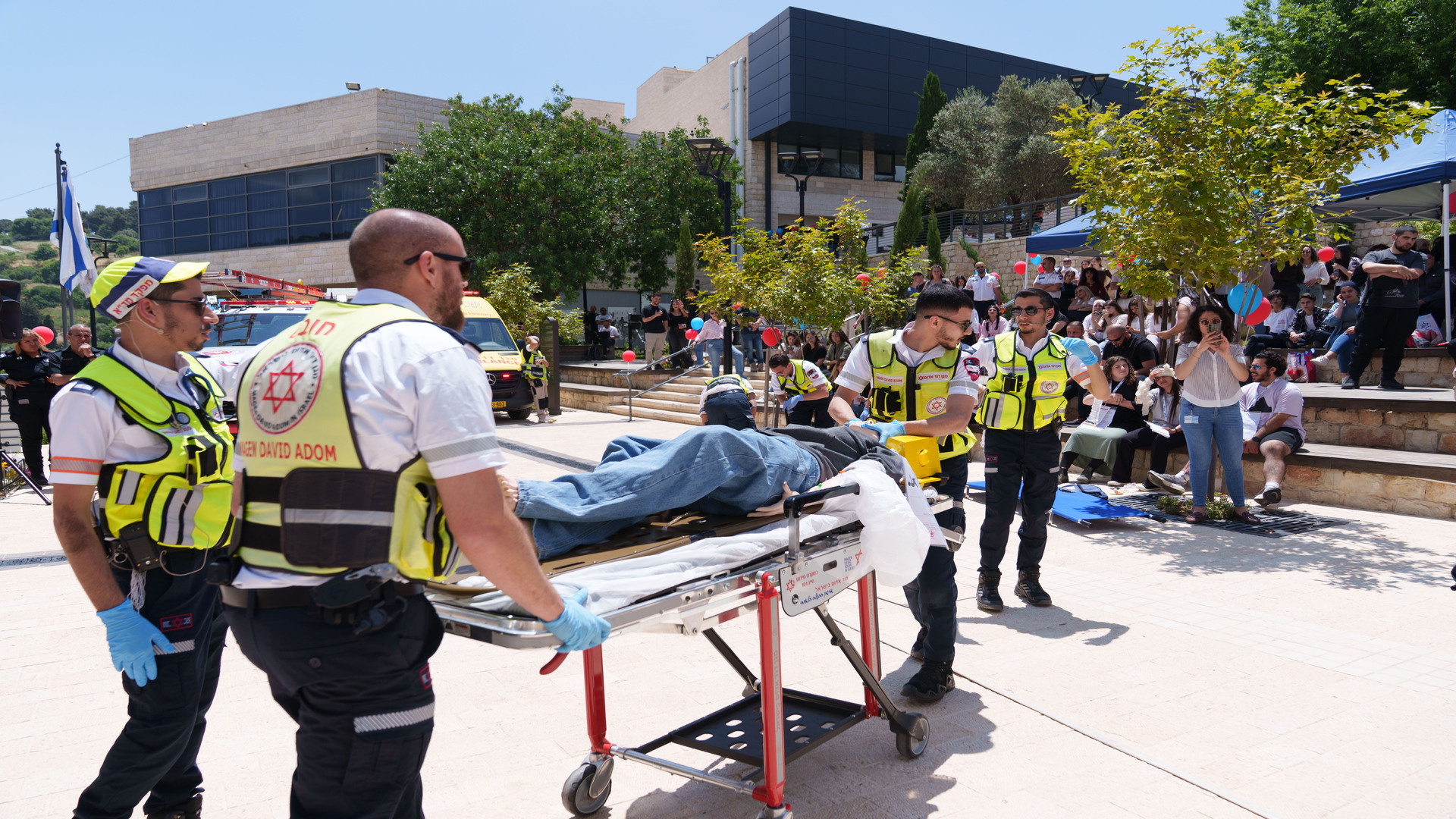
All of this converges in a single event that captures the spirit of the college: Paramedic Day. This first-of-its-kind initiative on May 25, 2026 brought together students, graduates, and professionals from across the healthcare system to recognize the role of paramedics in society and encourage interested candidates. The day featured several mass-casualty drills with a full, on-site care continuum, including rescues, life-saving field treatment, ambulance evacuation, and demonstrations of advanced emergency medicine technologies. Students worked in multidisciplinary teams with responders from Magen David Adom and the Fire and Rescue Services, exactly as they would in real life.
“These demonstrations send an important message,” says Prof. Rabia Khalaila, vice president for academic affairs. “The profession of emergency medicine does not always receive the recognition it deserves, both in public discourse and policy. We at ZAC are working to strengthen awareness of the healthcare providers—such as paramedics to nurses—who are the true backbone of the system. Without genuine investment in them, especially in the periphery, it’s impossible to achieve system stability.”
He adds that the future of emergency medicine is evolving—and fast. “The horizon for paramedics is constantly expanding. They are no longer only part of the pre-hospital framework. They are also integrated into hospitals and sometimes serve as physician assistants. This fact strengthens medical teams and enables faster, higher-quality care. The same goes for nurses, who are among the central anchors of the healthcare system.”
Behind paramedic training at ZAC lies one of the most advanced infrastructures in Israel: The Helmsley Institute for Advanced Health Training and Education. This state-of-the-art center—the only one of its kind in the North—enables students to practice responding to complex scenarios under conditions that replicate real-world situations. The institute includes dozens of simulation rooms, advanced equipment, and more than 100 smart mannequins that both respond to treatment in real time and simulate complex medical conditions. It allows trainees to practice complicated deliveries, resuscitations, the treatment of casualties under difficult field conditions, and even work inside an intensive-care ambulance simulator.
“Simulation is the place where you’re allowed to make mistakes, so that in the field, you won’t,” says Dr. Eran Tal-Or, director of the institute. “We create a situation of pressure, uncertainty, and fast decision-making. Students must cope with an overwhelming load and enormous responsibility, exactly as they will in the field. This is where they develop not only skill, but also self-confidence and leadership ability.”
Dr. Miki Weiss, head of ZAC’s Emergency Medicine Department, adds, “The modern paramedic is the supreme professional. He makes split-second decisions, operates advanced equipment, and directs teams in the field. He or she needs serious training—scientific, clinical, and human—to know how to think, act, and lead.”
At ZAC, this approach isn’t limited to emergency medicine. The field of nursing also receives significant emphasis, with training tracks combining academic studies, clinical experience, and the use of advanced technologies. Alongside the use of professional tools, nursing students learn emotional resilience and develop the capacity to handle complex situations—all with the understanding that the human connection is an inseparable part of care.
The significance of this training becomes especially acute in times of emergency. Since the outbreak of war on October 7, 2023, the Helmsley Institute has become a hub of activity for security forces and emergency teams, with thousands of soldiers and rescue personnel coming to train for real-life scenarios.
“In regular times, we serve our students and the regional healthcare system,” says CEO Yehuda Oz, CPA. “But in periods of emergency, we take on broader role. We opened the institute to security forces and emergency teams out of an awareness of our civic responsibility and that there is a genuine need we can address. Knowing that this training saves lives, there is no question as to whether to do it.”
For the students themselves, the emergency-medicine program is about far more than studies. It’s a daily encounter with a complex and often deeply unsettling reality. “You learn very quickly that this is not just another profession,” says one emergency-medicine student. “It’s about being there at the moment when someone is most vulnerable. Our studies at ZAC give us the confidence to take charge in these situations, because we’ve already practiced them dozens of times. It’s still hard when we get to the field, but we’re definitely arriving prepared.”
In a region where the distance from Israel’s Central District is felt across every domain, ZAC chooses to turn that distance into an advantage. “Precisely here,” concludes Prof. Taler, “we’re bringing excellence to the field, to the community, and to the daily reality of residents’ lives. We’ve made the periphery home to the most advanced spaces, technology, and equipment, all in order to cultivate not only professionals, but people who transform reality.”
Originally published in Hebrew in Israel Hayom.