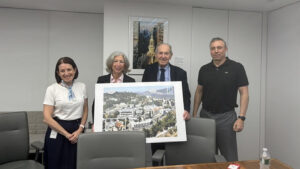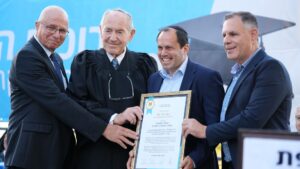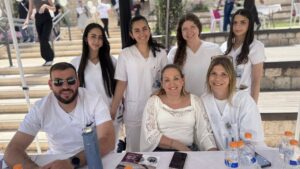

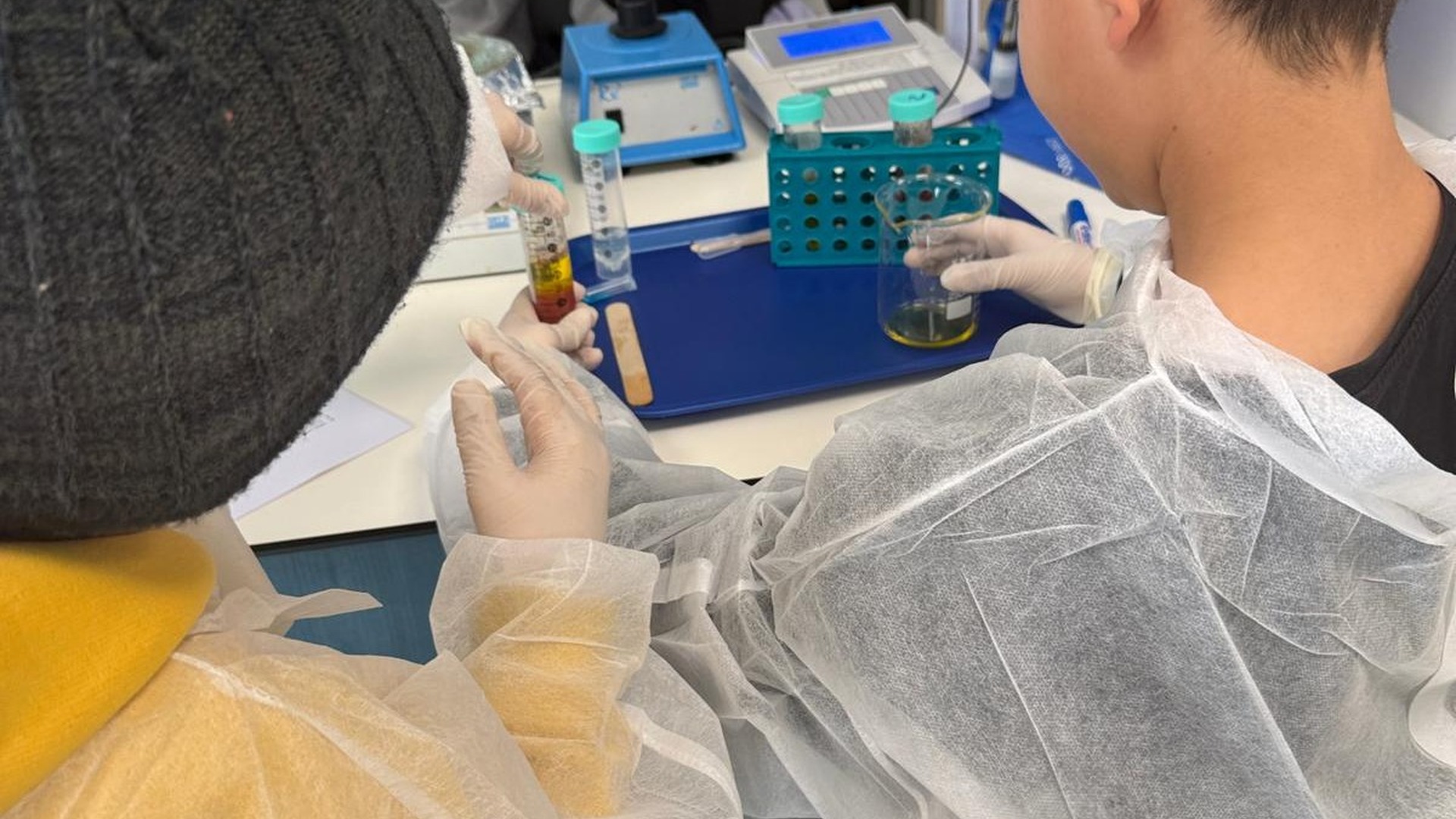
Last year, while trying to develop a food product as a part of their research, a group of religious high school girls in the Eastern Galilee were growing increasingly frustrated. To Dr. Tal Benjamin Zukerman, director of the Zefat Academic College (ZAC) program of which they were a part, that frustration was all par for the course.
“The reality of experimental research,” she explains, “is that often, even most of the time, things don’t work the way you want them to. Unfortunately, that can lead many aspiring young scientists to give up. That’s why a big part of what we do at Galilium is not only build interest and skills in science, but also the sense of grit required to see challenges through.”
Fortunately, that grit paid off. After another month of persistence, the girls had a product impressive enough to submit to a national science competition.
“Having gone through this process, these girls now see what they’re capable of,” says Benjamin Zukerman, who herself earned a doctorate in neuroscience from Bar-Ilan University. A native of the Galilee, she chose to return out of the desire to advance Israel’s northern periphery. “They’ve also engaged with what most of them probably considered a world beyond their reach. More than STEM education, we’ve given them permission to think big.”
Galilium, a joint initiative of ZAC, Kinneret Academic College, Tel Hai University, and the municipalities of the eastern Galilee, uses science education to catalyze Galilee youth’s academic and professional dreams. Through experiential learning days, science fairs, and research tracks for high-school credit, Galilium engages thousands of K-12 school children in the region each year in a range of scientific fields, and also introduces them to the range of options for applying scientific training.
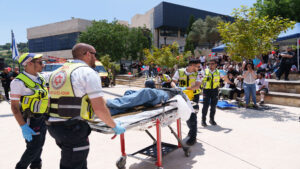
“Galilium at ZAC offers students the opportunity to combine hands-on experience with real world exposure,” explains Dr. Benjamin Zukerman. “Students can engage in EMS or medical laboratory work, for example, and then, as a part of the program, students often tour local hospitals and medical institutions where that knowledge gets translated into a career.” She notes that in this regard, ZAC can offer Galilee youth something no other northern institution can: Thanks to the new Helmsley Institute for Advanced Health Training and Education, Galilee schoolchildren can learn about emergency medicine close up. ZAC’s close partnership with Bar-Ilan University’s Azrieli Faculty of Medicine and Ziv Hospital, both of which are located in Zefat, also allows exposure to medicine more likely to ignite young minds.
Along with opening new professional horizons, Galilium also aims to expose the region’s youth to the myriad opportunities for a STEM career right here in the Galilee. “For a student to realize that not far away, there are people from their very same background working as doctors, lab technicians, and pharmaceutical scientists—it’s transformative. It can result in a new healthcare provider or medical researcher for the Galilee.”
That same transformative realization often occurs at ZAC, especially for young people—of whom there are a disproportionate number in the region—whose parents did not pursue a college degree. When they come to ZAC to learn in the Helmsley Institute or a forensics lab, says Benjamin Zukerman, these students also see a college campus for the first time. In time, the experience becomes normalized, and they start to imagine themselves sitting in a lecture hall or reading in the college library. For that reason, she adds, the intermittent closures of campus on account of wars with Lebanon and Iran have made it more challenging for Galilium to instill that same sense of aspiration.
But like all good researchers, Galilium’s staff kept at it.
“During the recent war with Iran, we held meetings in miklatim (underground bomb shelters) in our areas of activity, so that we could maintain our students’ momentum,” Benjamin Zukerman says. “We want to keep them focused on the horizon. These are the people on whom the future of this region depends, and if science can spark their determination to earn an academic degree, we’re equally determined to ignite the flame.”